The Jazz Age
Jazz moved from clubs and dance halls into recordings, radio broadcasts and national popular culture.
The Roaring Twenties
The 1920s transformed everyday life through radio, automobiles, cinema, new fashions, mass consumer culture, political conflict and a burst of artistic experimentation.
01
The 1920s were the years from 1920 through 1929, a period often associated with postwar economic growth, consumer culture, jazz, radio, automobiles, new social freedoms and sharp political tensions.
In the United States, the decade opened with women gaining a constitutional right to vote nationally and Prohibition taking effect.
Factories produced cars, appliances and consumer goods on a massive scale while installment buying and national advertising encouraged households to spend.
Radio connected millions of listeners to news, sports, comedy and music at the same moment.
Hollywood became a global entertainment center as silent cinema reached artistic maturity and synchronized sound began to transform film late in the decade.
The decade was also marked by segregation, immigration restrictions, racial violence, nativism and conflicts over religion, science and modern social values.
Its optimism ended dramatically with the 1929 stock market crash, which was followed by the Great Depression.
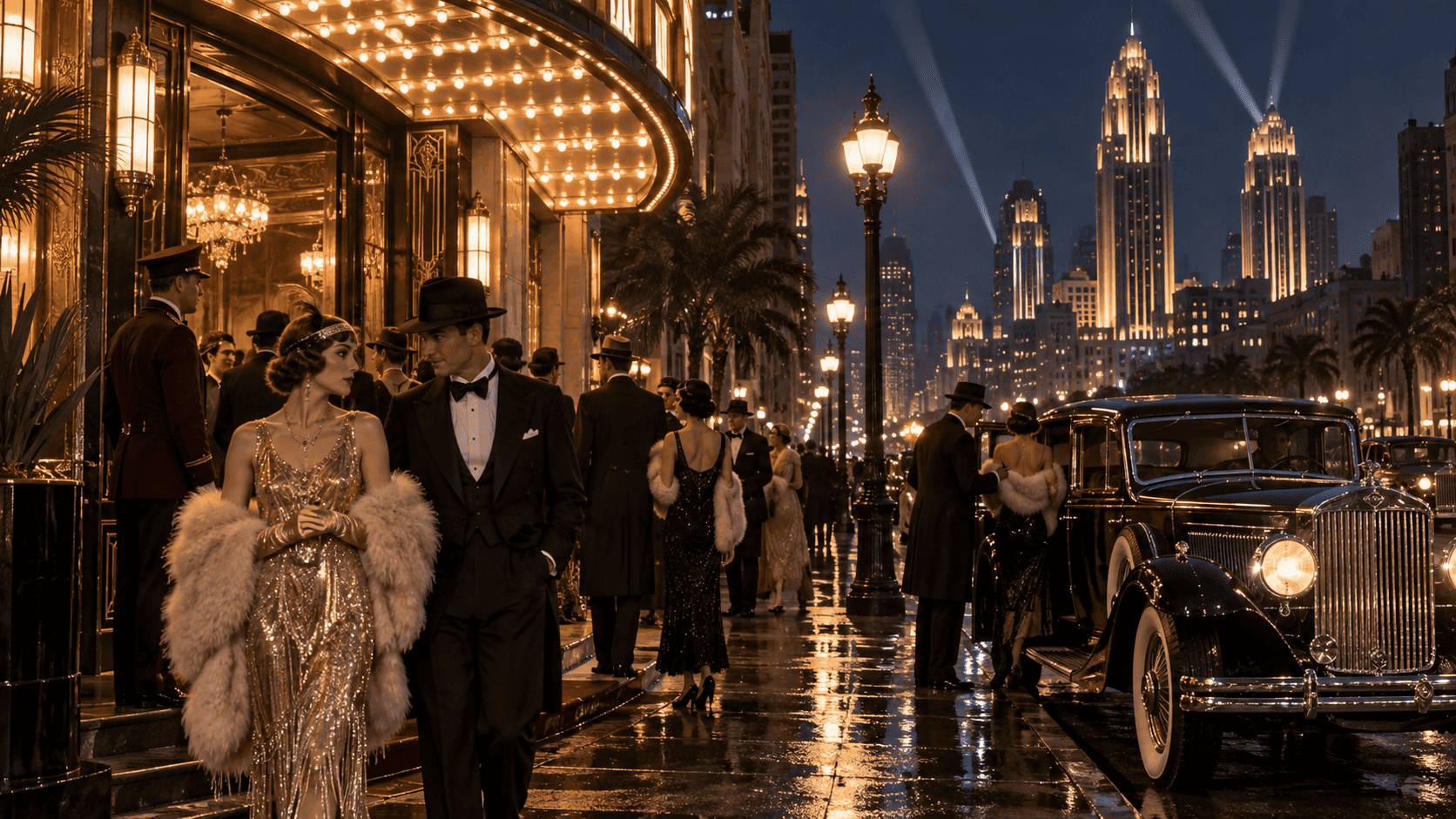
02
Jazz moved from clubs and dance halls into recordings, radio broadcasts and national popular culture.
The nationwide alcohol ban encouraged speakeasies, bootlegging and a profitable illegal liquor trade.
Bobbed hair, shorter hemlines and public nightlife became visible symbols of changing expectations for women.
Broadcasting created shared national audiences for entertainment, politics, advertising and sports.
Mass ownership of cars changed commuting, tourism, road building, shopping and courtship.
Black literature, visual art, theater and music flourished in Harlem and influenced culture far beyond New York.
Geometric luxury and machine-age style shaped architecture, interiors, jewelry, graphics and decorative objects.
Rapid consumer growth and speculation defined much of the decade before the market collapse of 1929.
03
The decade mixed political reform, cultural change, international diplomacy, racial conflict, technological spectacle and financial instability.
The Eighteenth Amendment and Volstead Act created a nationwide ban on producing and selling alcoholic beverages, helping speakeasies and bootlegging expand.
Ratification of the Nineteenth Amendment prohibited denying the vote on the basis of sex, although discriminatory laws and practices still restricted many women of color.
A white mob devastated the prosperous Black community of Greenwood in Tulsa, Oklahoma, killing residents and destroying homes and businesses.
Secret leasing of federal oil reserves became one of the most notorious political scandals of the decade.
Howard Carter’s discovery in Egypt sparked worldwide fascination with ancient Egyptian art, design, and archaeology.
The Union of Soviet Socialist Republics was formally established after the Russian Revolution and civil war.
The international winter sports competition at Chamonix, France, was later recognized as the first Winter Olympic Games.
The United States imposed strict national-origin quotas that sharply restricted immigration from many parts of the world.
The plan restructured German reparations and helped stabilize European finances for a time.
The Tennessee court case over teaching evolution became a national symbol of conflict between modern science and religious traditionalism.
European powers signed agreements intended to stabilize borders and reduce postwar tensions in Western Europe.
Millions of British workers joined a nine-day strike in support of coal miners.
Charles Lindbergh flew nonstop from New York to Paris, turning aviation into a global public spectacle.
The catastrophic flood displaced hundreds of thousands of people and exposed deep inequalities in disaster response.
The controversial case drew international protests and became associated with anti-immigrant and anti-radical tensions.
The film’s synchronized singing and spoken sequences helped accelerate Hollywood’s transition from silent movies to sound.
Women in Britain gained voting rights on the same terms as men at age twenty-one.
Dozens of nations signed an agreement renouncing war as an instrument of national policy.
A dramatic collapse in U.S. stock prices helped mark the end of the decade’s financial boom and preceded the Great Depression.
Illegal alcohol markets allowed criminal networks to grow in wealth and influence in several American cities.
04
The 1920s accelerated technologies that would define modern communication, aviation, medicine, household life and mass consumption.
Earle Dickson developed an early ready-to-use adhesive bandage for Johnson & Johnson in 1920.
Charles Strite patented an automatic pop-up toaster in 1921, making electric toasting more convenient.
Garrett Morgan received a 1923 U.S. patent for a traffic signal with an intermediate caution position.
John Augustus Larson built an early practical polygraph system in the early 1920s.
Jacob Schick patented designs that helped lead to commercially successful electric shaving systems.
Robert Goddard launched the first successful liquid-fueled rocket in 1926.
John Logie Baird demonstrated a working mechanical television system during the middle of the decade.
Philo Farnsworth transmitted an electronic television image in 1927.
Alexander Fleming observed the antibacterial effect of Penicillium mold in 1928.
Walter Diemer developed a workable bubble gum formula in 1928.
Clarence Birdseye refined rapid-freezing methods that helped create the modern frozen-food industry.
Leo Gerstenzang developed and marketed cotton-tipped swabs during the 1920s.
Radio-based methods for measuring aircraft altitude advanced through patents and experiments during the decade.
Norwegian engineer Erik Rotheim patented an early aerosol spray system in 1927.
Fritz Pfleumer developed paper-backed magnetic tape for recording sound in 1928.
Tractor-mounted grading and bulldozer blades became practical construction equipment during the 1920s.
Manufacturers turned radio sets into widely marketed household appliances.
Safer and more practical domestic refrigerators spread through affluent households during the decade.
Aircraft engines, navigation, airfields, and passenger service advanced rapidly after World War I.
Neon lighting became a dramatic feature of urban advertising and nightlife during the 1920s.
05
Life in the 1920s varied sharply by class, race, gender and location, so the glamorous image of the Roaring Twenties never described everyone.
Urban middle-class households encountered more electric appliances, telephones, department stores, chain stores and national brands.
Rural communities often experienced these changes more slowly and many farmers struggled economically even during the broader national boom.
Cars increased personal mobility while roads, filling stations, roadside restaurants and motor tourism expanded around them.
Radio brought national celebrities into the home and helped standardize entertainment across huge distances.
Advertising increasingly sold not only products but identities built around modernity, convenience, beauty and status.
Young people claimed more visible social space through dancing, movies, dating, fashion and college culture.
At the same time, segregation, discriminatory housing, immigration quotas and unequal access to prosperity limited the decade’s opportunities.
| Area | What changed | Why it mattered |
|---|---|---|
| Home entertainment | Radio ownership expanded rapidly. | Millions could hear the same news and entertainment at once. |
| Transportation | Automobiles became central to everyday mobility. | Roads, tourism and retail patterns changed around the car. |
| Popular culture | Movies, recordings and celebrity media grew. | National stars and fashions reached mass audiences. |
| Women’s public life | Voting rights and new social styles expanded visibility. | Political participation and cultural expectations shifted, though equality remained limited. |
| Consumer economy | Advertising and installment credit expanded. | Households bought more durable goods while personal debt became more common. |
06
The cultural energy of the 1920s came from a collision between new freedoms and older restrictions.
Jazz musicians developed increasingly individual solo styles while records, radio and touring carried the music across the country and abroad.
Harlem became a major center for Black writers, musicians, performers and artists whose work challenged stereotypes and reshaped American culture.
Prohibition did not eliminate drinking, but it changed where and how alcohol was consumed and gave the speakeasy an enduring place in the decade’s mythology.
Film stars, athletes, aviators and radio personalities became national celebrities in an expanding mass-media environment.
Art Deco and modernist design translated the machine age into bold geometry, luxury materials and streamlined ornament.
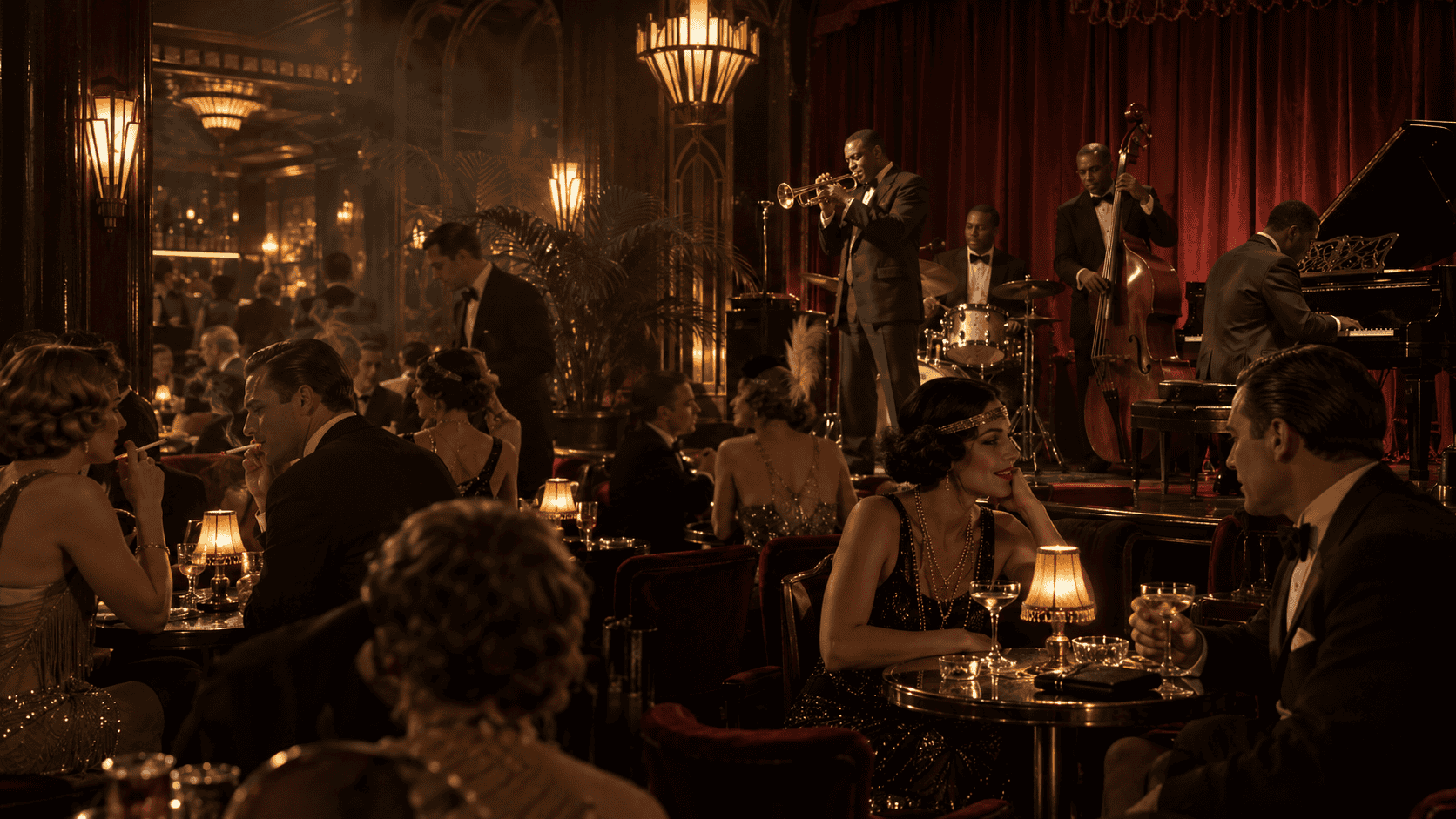
Young women associated with bobbed hair, shorter skirts, dancing, smoking, and a public rejection of older social conventions.
Hidden or semi-secret drinking clubs became symbols of nightlife during Prohibition.
The fast, syncopated dance became one of the decade’s best-known crazes.
Geometric forms, streamlined ornament, rich materials, and machine-age motifs shaped architecture, interiors, jewelry, and graphic design.
Black writers, artists, musicians, and intellectuals made Harlem a major center of cultural innovation.
F. Scott Fitzgerald’s 1925 novel became one of the enduring literary portraits of Jazz Age wealth and disillusionment.
Writers and artists experimented with fragmented perspectives, new forms, and a break from nineteenth-century conventions.
Silent films remained a dominant form of mass entertainment for most of the decade.
Newspaper crossword puzzles became a national craze.
Broadcasting brought music, news, comedy, sports, and advertising into the home.
Short hairstyles became a visual shorthand for modern femininity.
The movement continued to influence modern art and design during the decade.
The dance emerged in Harlem late in the decade and would become central to swing-era dance culture.
Stars such as Babe Ruth helped turn professional sports into mass entertainment.
The anti-establishment movement continued to influence avant-garde art and performance.
Nightclubs mixed music, dance, comedy, and theatrical performance.
Ouija boards, séances, and occult-themed entertainment remained popular in parts of mass culture.
Emotionally heightened visual styles shaped art, theater, and especially German cinema.
Live venues became laboratories for new musical styles, dances, and social identities.
Variety theater remained influential even as radio and movies changed popular entertainment.
07
Different American cities embodied different sides of the decade, from automobiles and movies to jazz, steel, finance and aviation.
Harlem, Broadway, Wall Street, radio, publishing, and nightlife made New York one of the defining cities of the decade.
Jazz, industry, immigration, Prohibition, and organized crime shaped the city’s national image.
Hollywood expanded rapidly as the film business became a global mass-entertainment industry.
Automobile manufacturing and assembly-line production transformed work, migration, and urban growth.
The city’s musical traditions remained foundational to jazz as musicians carried the style across the country.
Real-estate speculation and rapid construction drove a famous Florida land boom before the market collapsed.
The resort combined tourism, entertainment, conventions, and a reputation for loosely enforced Prohibition.
Publishing, art, trade, and Pacific connections supported an active cultural scene.
The capital reflected Republican national politics, postwar policy debates, and the growing reach of federal administration.
Universities, publishing, immigration debates, and the Sacco and Vanzetti case kept the city in national attention.
Heavy industry, transportation, finance, and cultural institutions made the city an important urban center.
Rail and river transportation, industry, and blues culture shaped the city’s identity.
Nightlife and jazz grew alongside machine politics and a rapidly changing downtown.
Manufacturing, migration, urban growth, and cultural institutions expanded during the decade.
Steel production made the city a symbol of heavy industry and industrial labor.
Breweries and hospitality businesses adapted to the restrictions of Prohibition.
Trade and aviation expanded as Boeing developed new aircraft and commercial opportunities.
Transportation, tourism, regional commerce, and energy interests supported growth in the Mountain West.
Blues, river commerce, and Beale Street culture made the city an important musical center.
Flour milling, retail, finance, and regional business linked the city to agricultural markets across the Upper Midwest.
08
1920s fashion became famous for a straighter silhouette, shorter hemlines, cloche hats, bobbed hair and clothing designed for a more active social life.
Women’s eveningwear often used beads, fringe and metallic detail that moved dramatically on the dance floor.
Men continued to wear suits for daily urban life, but sportswear, plus fours, sweaters and wider trousers signaled a more relaxed side of fashion.
Art Deco geometry appeared in jewelry and accessories while cosmetics became increasingly visible and commercially marketed.
Close-fitting bell-shaped hats framed the face and paired naturally with bobbed hairstyles.
Extremely wide-legged trousers became a striking men’s fashion associated with students and youth.
Affordable glass, metal, and imitation gems made bold accessories available to a wider market.
Strapped shoes offered both style and practicality for dancing.
Bulky fur coats became a collegiate fashion symbol, especially in popular imagery.
Straight silhouettes, dropped waists, beadwork, and fringe contrasted with earlier corseted styles.
Baggy knee-length trousers were widely associated with golf and leisure wear.
Beaded or jeweled bands became popular evening accessories.
Rounded-toe shoes with a strap remained a familiar women’s style.
Soft felt hats with creased crowns became increasingly common in men’s fashion.
Long strands of beads emphasized the vertical line of loose dresses.
Baggy trousers fastened below the knee appeared in sports and casual menswear.
Flattening undergarments supported the straight, youthful silhouette fashionable in women’s dress.
Decorative perforation gave men’s leather shoes a distinctive formal look.
Fur wraps and stoles added luxury to evening dress.
Bow ties remained a popular alternative to long neckties.
A sharply defined upper lip became a recognizable beauty style of the decade.
Some fashionable young women rolled stockings below the knee, especially in informal settings.
Clothing designed for tennis, golf, motoring, and resort life helped normalize more relaxed dress.
Geometric patterns, platinum, diamonds, colored stones, and sleek symmetry reflected the machine-age aesthetic.
09
Cinema in the 1920s moved from highly sophisticated silent filmmaking toward synchronized sound, making the decade one of the most transformative periods in movie history.
Comedy, horror, melodrama, science fiction, experimental film and large-scale spectacle all produced works that remain influential today.
German Expressionist horror whose distorted sets influenced generations of filmmakers.
Charlie Chaplin blended comedy and pathos in one of his most beloved early features.
F. W. Murnau’s unauthorized Dracula adaptation became a landmark of horror cinema.
Harold Lloyd’s clock-hanging sequence became one of silent comedy’s defining images.
Douglas Fairbanks starred in a lavish fantasy adventure built around spectacle and elaborate sets.
Chaplin turned an Alaskan prospecting story into classic visual comedy.
Sergei Eisenstein’s montage techniques became central to film theory and editing history.
Lon Chaney’s performance made the film a lasting icon of silent horror.
King Vidor’s World War I drama became one of the era’s major commercial and critical successes.
Buster Keaton combined stunt work, mechanical precision, and Civil War action.
Fritz Lang’s monumental science-fiction film visualized a futuristic industrial city.
F. W. Murnau used expressive camera movement and visual effects in this romantic drama.
Its synchronized songs and spoken passages accelerated the industry’s shift toward sound.
The aviation drama won the first Academy Award for Outstanding Picture.
Alfred Hitchcock’s silent thriller established themes he would revisit throughout his career.
Chaplin returned to the Tramp character in a comedy built around circus performance.
Carl Theodor Dreyer’s intense close-ups created one of silent cinema’s most celebrated performances.
Louise Brooks became an enduring screen icon through G. W. Pabst’s drama.
Dziga Vertov turned documentary technique into an experimental portrait of modern urban life.
Luis Buñuel and Salvador Dalí created a short film that became a touchstone of Surrealist cinema.
10
The 1920s are inseparable from jazz and blues, but the decade’s sound also included Broadway songs, dance orchestras, vaudeville, popular ballads and experimental concert music.
Recording technology and radio helped musicians become national figures while regional styles traveled faster than ever before.
Improvisation, syncopation, blues vocabulary, and ensemble interplay made jazz the signature sound associated with the decade.
Recording and touring brought Black blues artists to broader audiences across the United States.
Ragtime’s syncopated language remained an important ingredient in early jazz and popular piano styles.
New York song publishers and composers shaped mainstream American popular music.
Bigger ensembles expanded jazz arranging and dance-band performance before the later swing era.
Fast dance numbers supported one of the decade’s most recognizable social dances.
The Empress of the Blues became one of the era’s most important recording stars.
Armstrong transformed jazz through virtuosic trumpet playing, rhythmic invention, and charismatic singing.
Gershwin moved between popular song, Broadway, and concert music.
Ellington developed a distinctive orchestral jazz language and became closely associated with Harlem nightlife.
His large orchestra brought a polished form of popular dance music to enormous mainstream audiences.
The pianist and composer helped define early jazz arrangement and performance.
The cornetist and bandleader was an important mentor to Louis Armstrong and a major figure in early recorded jazz.
Commercial recordings helped spread jazz beyond the cities and clubs where the music developed.
The pianist, organist, composer, and entertainer emerged as a major Harlem musical personality.
One of the foundational classic blues singers, she recorded extensively during the decade.
The clarinetist and soprano saxophonist developed a powerful solo style that influenced early jazz.
His lyrical cornet playing made him one of the best-known white jazz musicians of the decade.
Waters moved between blues, jazz, vaudeville, and theater as her career expanded.
His orchestra and arrangements helped shape the big-band language that would flourish in the next decade.
11
Automobiles were among the most visible symbols of 1920s modern life.
Mass-market cars expanded personal mobility while luxury and sports cars turned engineering, speed and coachwork into objects of desire.
The growth of motoring also changed roads, fuel retailing, tourism, dating, commuting and the physical shape of American communities.
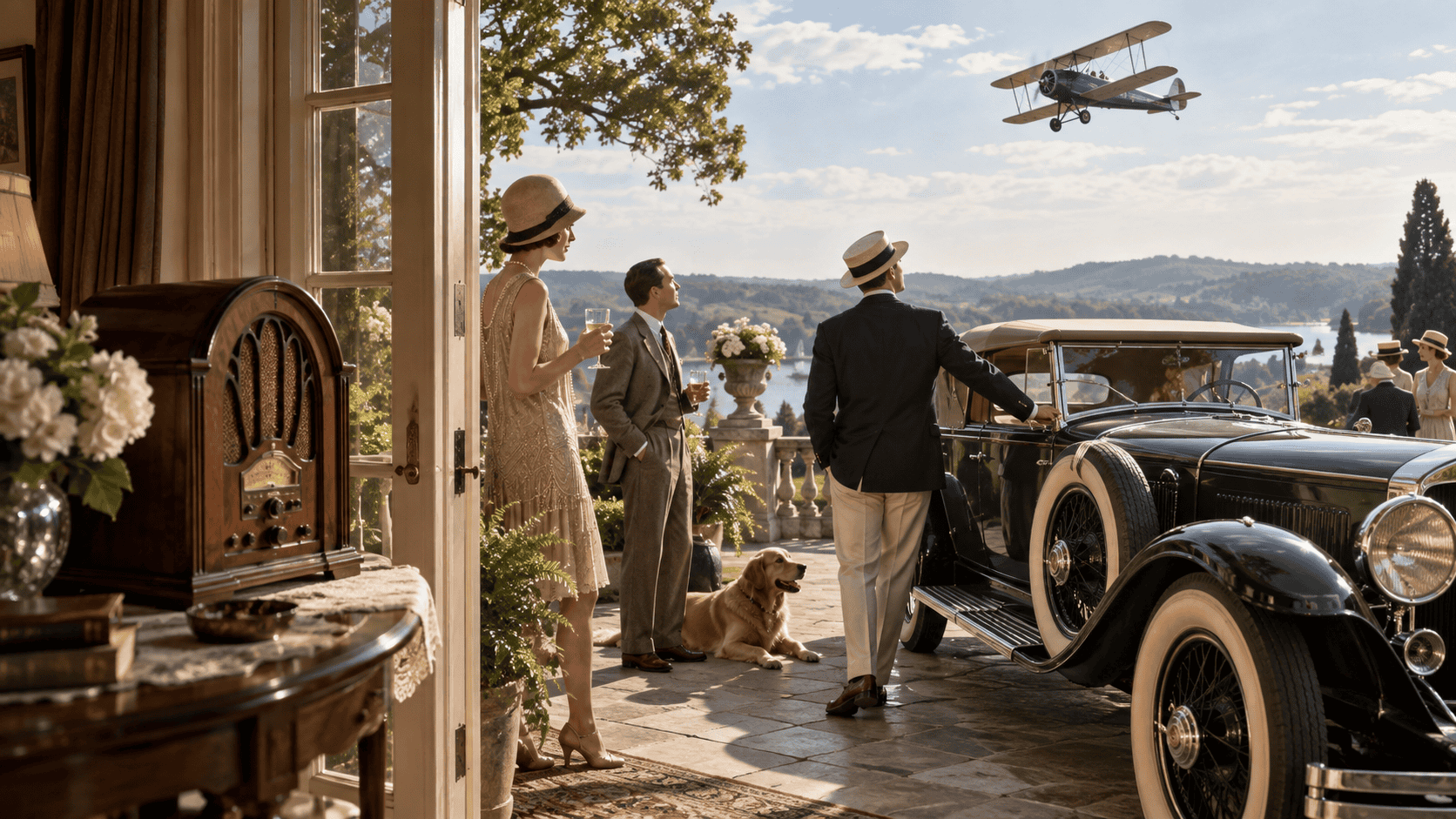
Affordable mass production kept the Model T central to American motoring until production ended in 1927.
Introduced in late 1927, the Model A modernized Ford’s mass-market lineup.
A durable British sports car whose competition success helped establish Bentley’s reputation.
One of the most successful racing cars of the decade and a landmark of elegant engineering.
The 1924 Chrysler helped launch a new American automobile company focused on advanced engineering and value.
A hand-built luxury automobile that became associated with elite motoring.
Introduced in 1928, the Model J represented extreme American luxury and high performance.
The small British car made personal motoring more affordable and influenced designs around the world.
A major General Motors competitor to Ford in the mass market.
Its innovative load-bearing body and independent front suspension made it a milestone in automotive design.
A prestigious luxury car combining sophisticated engineering with custom coachwork.
The American sporting car carried an image of speed and adventure into the early 1920s.
Produced into 1921, it represented the growth of European mass-production methods after World War I.
Late-decade Cadillacs combined V-8 power, luxury coachwork, and increasingly refined controls.
Supercharging gave this large German luxury car exceptional performance for its time.
Packard’s V-12 luxury car represented high-status American motoring in the early part of the decade.
Introduced in the 1920s, the 6C family mixed road-going elegance with strong motorsport credentials.
Ford ownership strengthened Lincoln as a major American luxury brand during the decade.
The British sports car earned a reputation for speed and long-distance performance.
Large, expensive Pierce-Arrow automobiles remained symbols of American prestige motoring.
12
The 1920s helped establish patterns that still define modern culture, including celebrity media, broadcast entertainment, automobile-centered mobility, national advertising and consumer identity.
The decade also exposed conflicts that remained unresolved, especially around race, immigration, inequality, gender expectations and the relationship between tradition and modern social change.
Its art, architecture, movies, fashion and music continue to shape how later generations imagine glamour and modernity.
The stock market crash of 1929 also made the decade a lasting warning about speculation, unequal prosperity and the fragility of economic confidence.
13
The name reflects the decade’s reputation for rapid economic growth, jazz, nightlife, consumer spending, new technology and highly visible social change.
The Jazz Age describes the cultural prominence of jazz music and the nightlife, dancing, youth culture and modern social attitudes associated with it during the 1920s.
A flapper was a young woman associated with modern 1920s fashion and behavior, especially bobbed hair, shorter dresses, dancing and a more public social life.
Prohibition banned the commercial production and sale of alcoholic beverages in the United States, encouraging speakeasies, bootlegging and profitable illegal alcohol networks.
Radio, improved automobiles, electric appliances, aviation technology, frozen-food methods, television experiments and medical discoveries all contributed to rapid technological change.
The decade ended with the 1929 stock market crash and a severe economic downturn that developed into the Great Depression.